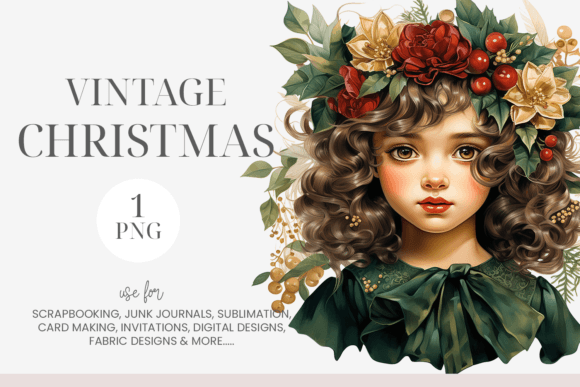
Watercolor Christmas Girl Clipart for Brand Illustrations
As a brand designer who has spent over a decade helping local businesses define their visual voice, I approach every new graphic design asset with a critical eye. It is not enough for an image to be pretty; it must perform. It must carry the weight of a brand’s personality and communicate value instantly. Recently, I evaluated Watercolor Christmas Girl Clipart for a seasonal project involving a boutique handmade soap company, and the results offered valuable insights for any creative entrepreneur looking to elevate their holiday marketing.
The first impression of this asset is undeniably warm. The watercolor technique brings a softness that digital vectors often lack, creating an organic, hand-painted feel that resonates deeply with consumers seeking authenticity. For a local business, especially one rooted in handmade or artisanal products, this mood is crucial. It suggests a brand personality that is friendly, festive, and approachable, yet retains a touch of elegance. It does not scream for attention with neon brightness; instead, it invites the viewer in with gentle hues and delicate brushstrokes. This makes it an ideal fit for brands that position themselves as premium but accessible, such as bakeries, florists, or children’s product lines.
Integrating the Asset into Real-World Packaging Design
In the context of packaging design, the versatility of Watercolor Christmas Girl Clipart becomes apparent. For the soap brand I was consulting, we needed a hero graphic for their limited-edition holiday gift sets. The clipart served as the central focal point on the box lid, immediately signaling the seasonal nature of the product without relying on cliché red and green overload. When used on product labels, the transparency of the PNG file allowed us to layer the illustration over textured paper backgrounds, enhancing the rustic, tactile quality of the packaging.
However, successful integration requires attention to visual hierarchy. Because watercolor illustrations can have soft edges, they must be placed against backgrounds that provide sufficient contrast. I found that pairing this clipart with clean, sans-serif typography created a modern balance, while combining it with script fonts emphasized a traditional, nostalgic feel. For small business branding, consistency is key. Using this same illustration across hang tags, thank-you cards, and sticker seals created a cohesive unboxing experience that strengthened customer trust and perceived value.
Strategic Use in Marketing Visuals and Social Media
Beyond physical products, this asset shines in digital spaces. For social media graphics, the illustration acts as a powerful anchor for promotional posts. I utilized it in Instagram stories to announce holiday sales, where its festive charm increased engagement rates compared to text-only announcements. The emotional connection evoked by the character helps humanize the brand, making marketing visuals feel less like advertisements and more like invitations to celebrate.
For website banners and email headers, the clipart provides a decorative element that breaks up textual content. It works exceptionally well for editorial design layouts within blog posts about holiday gift guides or seasonal recipes. When used in Canva template designs for clients who manage their own social media, the asset allows non-designers to maintain a professional look. The key is to ensure the illustration does not compete with the call-to-action button or critical information. It should support the message, not obscure it.
Where to Exercise Caution in Commercial Design
While Watercolor Christmas Girl Clipart is versatile, it is not a universal solution. As a designer, I advise against using it in formal corporate branding where a sleek, minimalist aesthetic is required. The soft, decorative nature of watercolor can clash with the rigid structure of luxury minimalist brands or tech-focused companies. Additionally, caution is needed when applying this asset to very small labels or crowded packaging layouts. If the illustration is scaled down too much, the delicate details may blur, losing their impact and looking muddy in print.
It is also vital to avoid placing the clipart over low-contrast backgrounds or busy patterns. The subtle gradients of watercolor need breathing room. In ingredient-heavy layouts, such as nutritional facts panels or legal disclaimers, this illustration should never be used as a background watermark, as it can reduce readability and compromise compliance. Always prioritize clarity and legibility over decoration in these functional areas of professional branding.
Practical Notes for Designers and Brand Owners
Before committing to this asset for client work or product sales, there are several technical checks to perform. First, always test the PNG design on real packaging mockups. Screen colors differ significantly from printed ink, so a proof print is essential to ensure the watercolor tones remain vibrant and do not appear washed out. Check the black and white usage as well; if you plan to use cost-effective single-color printing for certain items, ensure the illustration holds its form without color gradients.
Inspect the file quality closely. High-resolution clipart should have crisp edges despite the soft paint effect. If vector files like SVG design formats are available, verify their editability. Can you change the hue to match your specific brand palette? This flexibility is invaluable for maintaining brand identity consistency across different product lines. Furthermore, always confirm the commercial license terms. Ensure that the usage rights cover physical product sales, digital marketing, and unlimited prints, especially if you are scaling your handmade business.
Finally, consider the typographic pairing. Test the illustration beside serif fonts for a classic look, or handwritten fonts for a playful vibe. Compare your final design with competitor packaging to ensure your use of Illustrations stands out rather than blends in. By treating Watercolor Christmas Girl Clipart as a strategic component of your design assets rather than just a decorative afterthought, you can create a memorable, emotionally resonant brand presence that drives sales and builds loyalty during the critical holiday season.