Reviewing Christmas Pug Broken Wall 3 for Holiday Stitching
As a designer who has spent countless hours digitizing and testing machine embroidery design files, I have learned that not every cute concept translates well to thread. The holiday season brings a flood of festive motifs, but few capture the specific blend of humor and charm quite like pug-themed art. Recently, I pulled Christmas Pug Broken Wall 3 from my library to evaluate its potential for real-world applications. This piece falls under the category of Illustrations, which often presents unique challenges regarding stitch density and detail retention. My goal was not just to admire the artwork, but to determine if it holds up under the needle when applied to actual merchandise.
First Impressions and Visual Personality
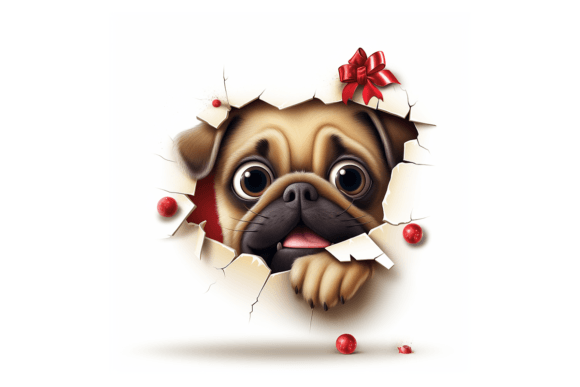
The initial appeal of Christmas Pug Broken Wall 3 lies in its narrative quality. It is not merely a static image of a dog; it suggests movement and mischief. The "broken wall" element adds a layer of depth and texture that distinguishes it from standard flat icons. For an embroidery project, this is crucial. Flat designs can sometimes look stiff on fabric, whereas designs with implied depth or layered elements tend to have more visual interest after stitching. The mood is playful yet cozy, making it an ideal candidate for holiday embroidery projects that aim to evoke warmth and laughter rather than just traditional solemnity.
When examining the layout, I noticed the balance between the character and the background elements. In digital form, these details might seem crisp, but in embroidery, we must consider how satin stitch and fill stitch techniques will render these shapes. The design appears to rely on a mix of textured fills to simulate the brickwork or broken surface, contrasted with smoother areas for the pug’s fur. This contrast is vital for creating a professional-looking finished product. If the transition between these areas is too abrupt or the stitch count is too high in small areas, the fabric can pucker. However, visually, the composition feels balanced enough to work within standard hoop sizes.
Real-World Application: The Tote Bag Test
To truly test the viability of this design, I imagined applying it to a heavy canvas tote bag design. This is a popular item for Etsy seller shops and craft fairs during the fourth quarter. Canvas provides a stable base that can handle moderate stitch density without excessive stabilizer requirements. In this scenario, Christmas Pug Broken Wall 3 shines as a focal point. The humorous nature of the pug breaking through a wall makes the bag an instant conversation starter, increasing its value as a personalized gift or a boutique item.
I also considered its use on a unisex sweatshirt. Sweatshirt embroidery requires careful attention to fabric stretch and thickness. A design of this nature, likely featuring some denser areas for the "wall" effect, would need a cut-away stabilizer to prevent distortion over time. On a fleece or cotton-blend hoodie, the texture of the thread would complement the softness of the garment. The key here is scale. If the design is too small, the intricate details of the broken wall might get lost in the pile of the fabric. If it is too large, it could become stiff and uncomfortable. Finding that sweet spot is where experienced judgment comes into play.
Versatility Across Product Lines
Beyond bags and apparel, this illustration has potential in home decor. Imagine it stitched onto a pillow cover for a guest room or a kitchen towel for a festive hostess gift. The handmade product market thrives on items that feel unique and curated. Because Christmas Pug Broken Wall 3 is an illustration rather than a simple monogram, it appeals to buyers looking for statement pieces. It could also be scaled down for an embroidered patch, provided the smaller version retains enough clarity in the facial features of the pug. Patches are excellent for small shop product lines because they are low-commitment items for customers who want to add flair to jackets or hats.
Technical Considerations and Potential Pitfalls
While the aesthetic is strong, practical execution requires caution. One major concern with any design labeled as an illustration is the level of detail. Tiny details often do not translate well to thread. If Christmas Pug Broken Wall 3 includes very fine lines representing cracks in the wall or individual hairs, these may need to be simplified in the digitizing process. Using a running stitch for fine outlines can be effective, but it must be secure. I always recommend testing the design on scrap fabric identical to your final material. This allows you to check for thread breaks, nesting, and overall clarity.
Fabric choice plays a significant role in the outcome. On dark fabrics, you must ensure that the thread colors provide sufficient contrast. A black pug on a navy shirt might disappear if the shading is not distinct. Conversely, on light fabrics, dense dark stitches can cause pulling if the stabilizer is inadequate. For stretchy fabrics like jersey knits used in baby clothes, extra care is needed. Baby embroidery demands softness, so a design with high stitch density might feel scratchy against sensitive skin. In such cases, using softer threads like rayon or polyester and ensuring a lightweight stabilizer is essential.
Stitch Density and Hoop Size Management
Before loading the digital embroidery file into your machine, verify the recommended hoop size. Trying to force a large design into a small hoop can lead to misalignment and wasted materials. Additionally, review the stitch density settings. High-density areas, such as the solid parts of the wall or the pug’s body, can create a stiff patch on the fabric. If you are creating custom apparel that needs to drape naturally, you may need to adjust the underlay or reduce the fill density slightly. This is particularly important for curved surfaces like caps, where stiffness can ruin the shape of the hat.
It is also wise to test the design in black and white mockups. This helps you see the value structure without the distraction of color. If the design relies too heavily on color gradients to define shape, it may look flat when stitched with solid thread colors. Good embroidery design should have clear definition through stitch direction and density, not just hue.
Commercial Viability and Brand Consistency
For commercial embroidery professionals and craft business owners, consistency is key. Using a high-quality design like Christmas Pug Broken Wall 3 can enhance brand perception. Customers associate clean, well-stitched designs with professionalism. A messy or poorly optimized file can damage trust. Therefore, inspecting the embroidery file for jump stitches, proper trim commands, and logical sewing order is part of the review process. A well-digitized file saves time and reduces thread waste, directly impacting your profit margin.
Furthermore, consider the licensing terms. Before selling finished items or using the design in printable mockup previews for your online store, confirm that you have the appropriate commercial license. Many designers offer different tiers of usage rights. Respecting intellectual property protects your business and supports the creative community. When used correctly, this design can be a standout asset in your holiday collection, driving engagement and sales through its unique personality and high-quality execution.
In conclusion, Christmas Pug Broken Wall 3 offers a charming and versatile option for holiday projects. Its success depends on thoughtful application, proper technical setup, and an understanding of how thread interacts with fabric. By taking the time to test and adjust, you can transform this digital illustration into a tangible, high-value handmade product that delights customers and stands out in a crowded market.