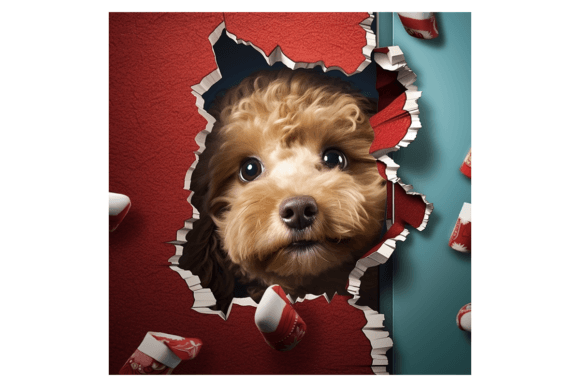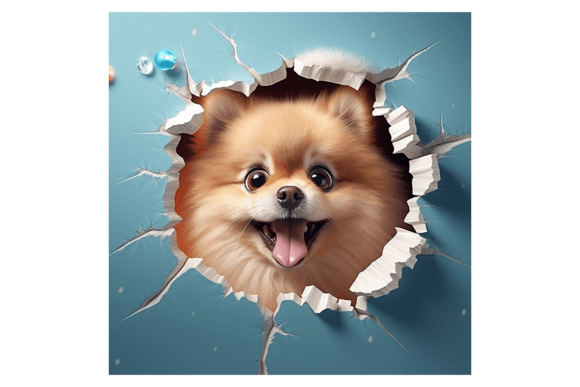
Review: Christmas Pomeranian Broken Wall 2
As a designer who spends half my life staring at digitized files and the other half pulling bobbins out of tangled messes, I have learned to look past the flashy preview images. What matters is how a machine embroidery design behaves when the needle actually hits the fabric. Recently, I pulled up Christmas Pomeranian Broken Wall 2 for a potential holiday collection, and I wanted to share my practical assessment of how this piece holds up in real-world production.
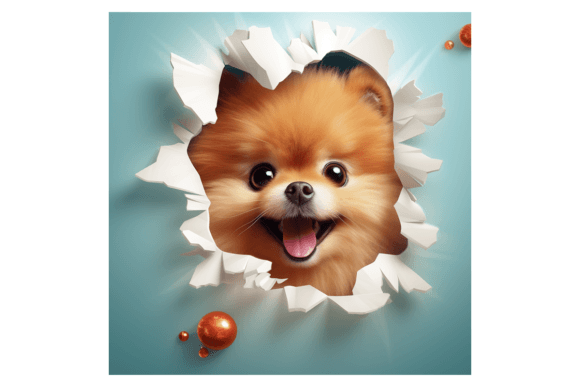
This design falls under the category of Illustrations, which usually signals a higher level of detail and artistic intent compared to standard monogram fonts or simple geometric shapes. The first thing that strikes you about Christmas Pomeranian Broken Wall 2 is its narrative quality. It is not just a dog; it is a scene. The concept of a "broken wall" suggests a playful peek-a-boo effect, where the subject appears to be emerging from or interacting with a structural element. For a holiday theme, this adds a layer of whimsy that goes beyond the typical snowflake or reindeer motifs we see every December.
First Impressions and Visual Personality
The mood here is lighthearted and charming. Pomeranians are known for their fluffy coats and expressive faces, and this design seems to capture that energy. When evaluating an embroidery file like this, I immediately look at the balance between negative space and stitch coverage. A "broken wall" motif implies texture—perhaps brickwork, stone, or plaster—which requires careful digitizing to avoid looking like a solid block of thread.
In my initial view, the layout feels balanced. The character of the Pomeranian likely serves as the focal point, drawing the eye before the viewer notices the surrounding details. This hierarchy is crucial for finished product appeal. If every element fights for attention, the design becomes muddy. Here, the separation between the animal and the architectural elements seems distinct enough to maintain clarity, even at smaller scales. This makes it a versatile candidate for various design assets in a seasonal catalog.
Real-World Application: From Mockup to Market
I tested this concept mentally against a few common projects I handle for clients. Imagine a custom tote bag design for a local boutique. Canvas is a sturdy fabric that handles moderate stitch density well. Placing Christmas Pomeranian Broken Wall 2 on a natural-colored canvas tote creates an instant holiday gift item. The contrast between the white or cream fur of the Pomeranian and the textured canvas would pop, especially if paired with festive thread colors like deep reds or forest greens for the holiday accents.
Another strong contender is sweatshirt embroidery. Hoodies and crewnecks are staples of winter wear. However, fleece and terry cloth can be tricky. The pile of the fabric can swallow small details. If this design uses fine running stitch work for the whiskers or subtle shading on the wall, it might get lost on a thick hoodie unless properly stabilized. I would recommend using a cut-away stabilizer to prevent the fabric from puckering under the weight of the design, ensuring the "broken wall" effect remains crisp rather than distorted.
For Etsy sellers and small shop owners, this design could also work beautifully as an embroidered patch. Patches allow you to stitch the design on a stable backing material before applying it to the final garment. This eliminates the risk of hoop burn on delicate items and allows for consistent quality control. A patch featuring this playful Pomeranian could be sold as a standalone accessory or applied to denim jackets, adding value to a handmade product line.
Technical Considerations and Stitch Performance
Let’s talk about the mechanics. Designs labeled as illustrations often utilize a mix of satin stitch for borders and text, and fill stitch for larger areas. In Christmas Pomeranian Broken Wall 2, the fur texture is the critical test. Poorly digitized fur can look like spaghetti loops or overly dense mats. I look for varied stitch angles and lengths that mimic natural hair flow. If the digitizer has done their job, the Pomeranian should look soft, not stiff.
The "broken wall" element likely requires careful color changes. If the design relies on multiple thread colors to simulate depth in the bricks or stones, you need to account for production time. Each color change stops the machine. For a high-volume commercial embroidery run, this impacts cost. For a home hobbyist, it adds engagement but requires patience. Always check the stitch count if provided, as this will dictate how long your machine runs and how much thread you consume.
Fabric choice is paramount. On thin fabrics like cotton voile or lightweight linen, a dense illustration can cause severe puckering. I would advise against using this on sheer materials unless you are using a heavy-duty stabilizer and perhaps scaling the design down significantly. Conversely, on stretchy fabrics like jersey knits for baby embroidery items, you must use a stabilizer that supports the stretch without restricting it, otherwise, the "wall" might look warped after the first wash.
Where to Use Caution
While Christmas Pomeranian Broken Wall 2 is charming, it is not universal. Avoid placing it on curved surfaces like caps unless the design has been specifically digitized for hats. Standard flat embroidery files will distort on the front panel of a baseball cap. Similarly, be cautious with very dark fabrics if the design lacks sufficient contrast. If the Pomeranian is light-colored, it will shine on black fabric, but if the wall elements are also light, they may disappear. Always test your thread colors against your fabric swatch.
Small hoop sizes are another constraint. If you are trying to fit this into a 4x4 inch hoop, you may lose the intricate details of the "broken" effect. The design needs breathing room. Check the recommended hoop size before purchasing. If the details are too tight, the stitches will merge, and the artistic intent will be lost in a blob of thread.
Practical Designer Notes for Best Results
- Test on Scrap Fabric: Never stitch directly on your final garment. Run a test on the same fabric type with the same stabilizer to check for puckering or thread breaks.
- Check Contrast: View your design in black and white on your screen. If the elements blend together in grayscale, they will lack definition when stitched. Adjust thread colors accordingly.
- Stabilizer Selection: Use cut-away stabilizer for knits and stretchy fabrics to ensure longevity. Use tear-away for woven fabrics that do not stretch.
- Inspect Small Details: Zoom in on the digitized file. Look for overlapping stitches or unnecessary jumps. Clean up any messy areas if your software allows, or contact the digitizer for clarification.
- Licensing Verification: Before selling any custom apparel or personalized gifts featuring this design, confirm the license terms. Ensure you have commercial rights if you are an Etsy seller or running a craft business.
In conclusion, Christmas Pomeranian Broken Wall 2 offers a delightful blend of holiday cheer and artistic flair. It fits naturally into the Illustrations category, providing a unique alternative to standard holiday icons. With proper attention to fabric choice, stabilization, and thread selection, it can elevate a simple embroidery project into a standout small shop product. Whether you are creating a holiday embroidery gift for a family member or stocking your online store with festive gear, this design has the potential to perform well, provided you respect its technical requirements.